The quality of that data, depends heavily on the tools used to collect it. While we often focus on the questions themselves, the hidden power of a well-designed questionnaire lies in its flow. The logical and intuitive progression of questions can significantly impact respondent engagement and the accuracy of the data collected. This is particularly true in KAP (Knowledge, Attitudes, and Practices) research, where understanding community perceptions is paramount.
The Foundation: KAP Study Design and Research Protocol
A successful KAP study design begins long before the first question is written. It requires a clear research protocol that outlines the KAP objectives. What do you want to learn, and from whom? Once these objectives are established, the next step is to design a questionnaire that will effectively capture the necessary information. This is where a robust survey platform or survey builder becomes invaluable. These tools, whether an online survey tool or a KAP survey app for offline data collection, provide the framework for building a structured and effective questionnaire.
Structuring for Success: The Art of Questionnaire Flow
The flow of a questionnaire is like the narrative of a story. It should have a clear beginning, middle, and end. A disjointed or confusing questionnaire can lead to respondent fatigue and, ultimately, poor-quality data. Here are some key principles for creating a powerful questionnaire flow:
- Start with the simple: Begin with easy, non-threatening questions to build rapport and ease the respondent into the survey.
- Group similar topics: Organize questions into logical sections. This helps the respondent to stay focused and provides a sense of order.
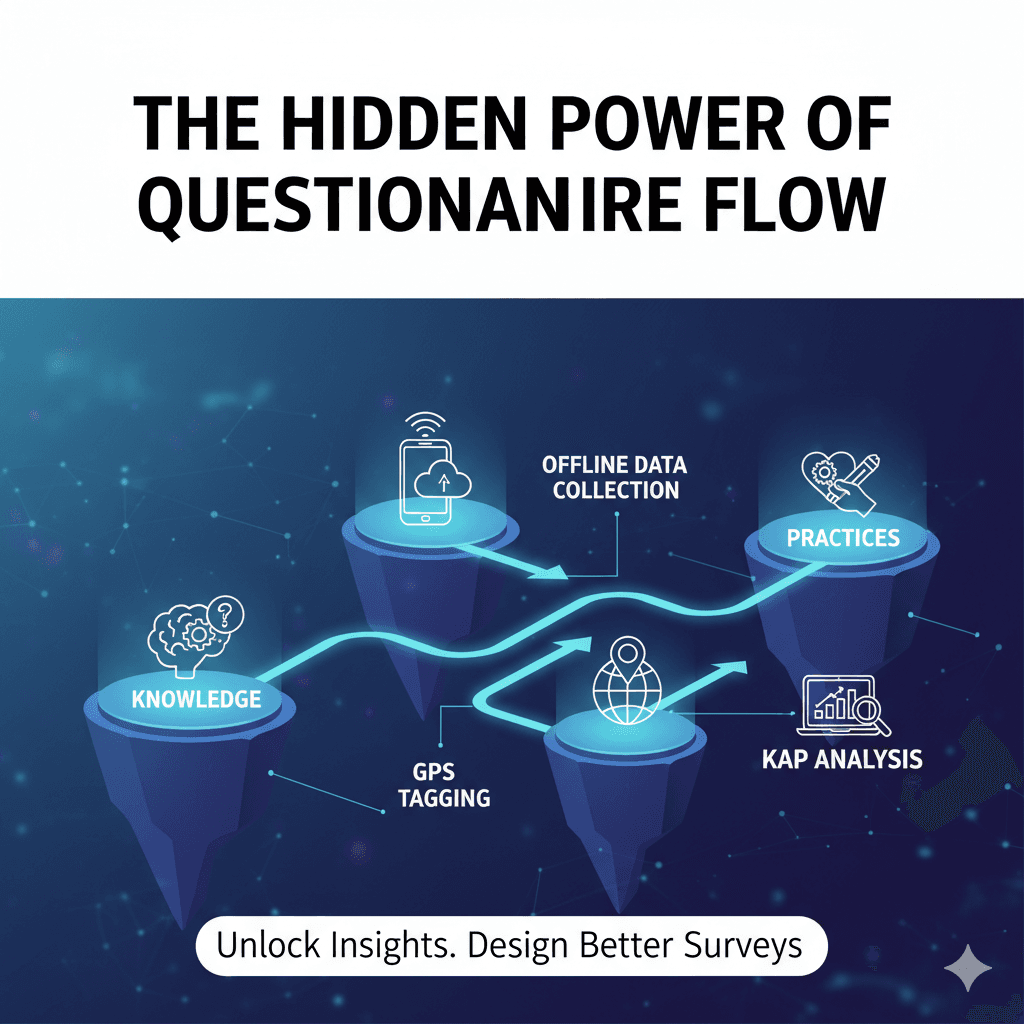
- Use a logical progression: Move from general questions to more specific ones. For example, if you are conducting a KAP evaluation on a new health program, you might start with general knowledge questions, then move on to attitudes, and finally, to specific practices.
- Keep it concise: As noted in "Secrets for Drafting Top-Notch Questionnaires for Research Purposes," brevity is key. A lengthy and convoluted questionnaire can lead to high dropout rates.
Leveraging Technology for Enhanced Data Collection
Modern survey methodology has been revolutionized by technology. A powerful survey platform can offer a range of features to enhance field data collection. For instance, a mobile survey app allows for offline data collection, which is crucial in areas with limited internet connectivity. Furthermore, features like GPS tagging can provide valuable location data, adding another layer of depth to your KAP analysis. This is especially useful in large-scale studies where understanding geographical variations in knowledge, attitudes, and practices is important.
The Impact of Flow on KAP Analysis
The ultimate goal of any KAP research is to generate meaningful insights through KAP analysis. The quality of this analysis is directly tied to the quality of the data collected. A well-designed questionnaire flow ensures that the data is not only complete but also reliable. When respondents are engaged and understand the questions, they are more likely to provide thoughtful and accurate answers. This, in turn, leads to a more robust KAP evaluation and a deeper understanding of the community perceptions being studied.
Conclusion: Unlocking the Power of Flow
In conclusion, the hidden power of questionnaire flow cannot be overstated. It is a critical component of effective survey methodology that can make or break a research project. By focusing on a logical and intuitive structure, researchers can improve respondent engagement, enhance data quality, and ultimately, unlock more meaningful insights from their KAP research. The right survey builder and survey platform can provide the tools needed to design and implement a questionnaire with a powerful flow, ensuring that the data collected is both accurate and insightful.
Reference
Nairaproject. (n.d.). Secrets for Drafting Top-Notch Questionnaires for Research Purposes. Retrieved from https://nairaproject.com/blog/secrets-for-drafting-top-notch-questionnaires-for%20research-purposes.html





