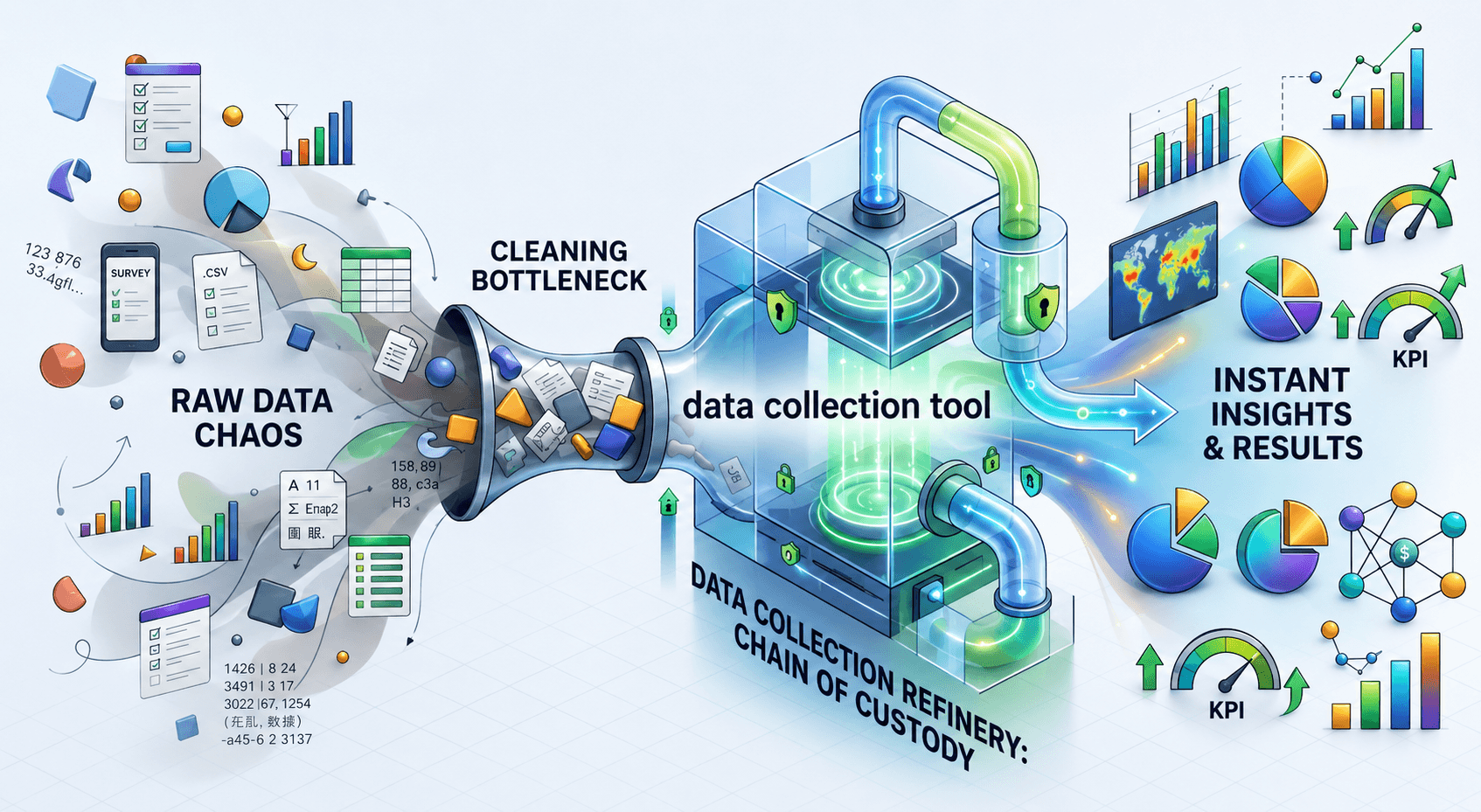
For years, research directors have watched their response rates slowly plummet.
If you are trying to conduct a baseline assessment, gather community feedback, or run a longitudinal study, sending a generic web link via email is practically a guarantee of low engagement. In 2026, people simply do not respond to email surveys the way they used to, and deploying in-person enumerators for every single follow-up is financially impossible for most program budgets.
The populations you need to reach, whether they are urban youth, remote healthcare workers, or displaced communities, are communicating differently. They are on WhatsApp, Telegram, Viber, and SMS.
To get accurate, high-volume data, your research methodology must adapt to these channels. Here is how leading M&E (Monitoring and Evaluation) teams are modernizing their outreach and unifying their data collection across every messaging platform simultaneously.
The Multi-Channel Chaos Problem
Recognizing the shift to mobile messaging is easy. Executing it is the hard part.
When organizations try to run assessments across multiple channels, they usually run into a massive administrative wall.
If a project manager decides to use an SMS blasting tool for rural areas, a WhatsApp bot for urban centers, and offline tablets for deep-field clinics, they have just created three entirely separate data silos. At the end of the month, a data analyst has to export three different CSV files, manually align the columns, and scrub the formatting errors before they can even begin to look for programmatic insights.
This fragmented approach destroys data integrity and wastes weeks of valuable time.
8 Channels, 1 Unified Dashboard
You should not have to choose between reaching your target audience and maintaining a clean dataset.
This is the exact operational hurdle that KAPsurvey was engineered to solve. It is built on the principle that the channel of delivery should never complicate the analysis of the data.
With enterprise-grade infrastructure, project directors can manage their entire outreach strategy from a single, unified command center.
1. The Omnichannel Composer
Instead of juggling subscriptions to five different messaging platforms, researchers can build their assessment once in the KAPsurvey builder. From that single interface, they can distribute the exact same questionnaire via Email, SMS, WhatsApp, Telegram, Viber, QR Code, or an open Web Link.
If a respondent does not have a smartphone, they receive a simple, automated SMS flow. If they are in a region where Telegram is the primary communication tool, the survey meets them there securely.
2. Automated Campaign Management
Following up with respondents manually is tedious and prone to human error. Using KAPsurvey's Audience CRM, program teams can set up automated, multi-channel campaigns.
You can schedule your midline survey to send automatically, configure smart reminders for non-respondents, and track delivery rates channel-by-channel without lifting a finger. The outreach runs itself, freeing your team to focus on the results.
3. Instantly Standardized Data
The most powerful advantage of a unified platform happens after the respondent hits "submit."
Whether an answer was texted from a flip phone in a rural village, submitted via a WhatsApp chat in a capital city, or logged completely offline by an enumerator with the KAPsurvey Mobile app, it all lands in the exact same format.
The data is instantly standardized and fed into your live KAPsurvey analytics dashboards. There is no manual stitching, no data cleaning delay, and no corrupted spreadsheets. You get an immediate, real-time view of your project's impact across all demographics.
Meet Your Audience Where They Are
Your research is only as good as your response rate. If you are still relying on legacy email blasts and disconnected tools, you are missing the voices that matter most to your project's success.
It is time to make data collection conversational, accessible, and automated. Visit kapsurvey.com today to explore our multi-channel distribution tools and launch your first automated campaign.





