A step by Step guide
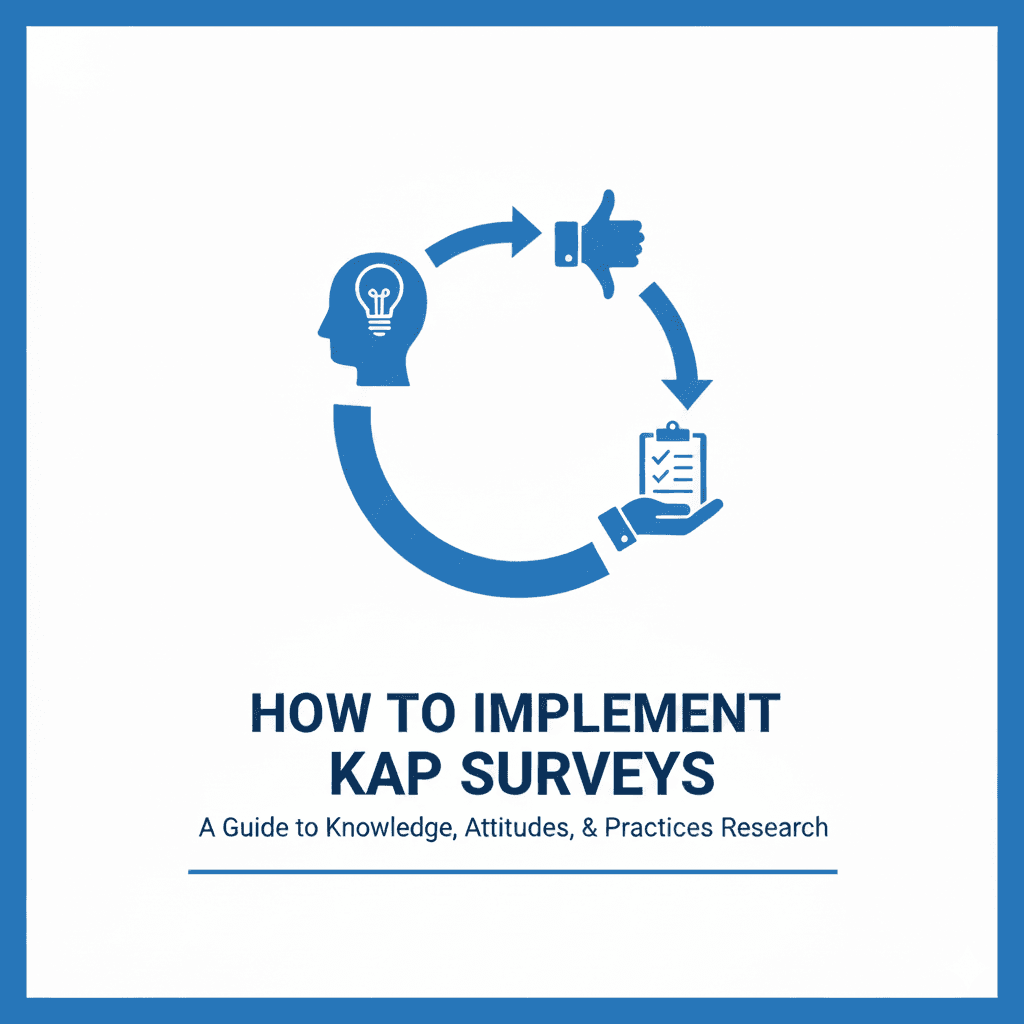
A Knowledge, Attitudes, and Practices (KAP) survey is mainly a quantitative method that provides access to quantitative and qualitative information. KAP surveys reveal misconceptions or misunderstandings that may be obstacles to the activities that we would like to implement. In turn, this allows us to better tailor our interventions. A KAP survey can: identify knowledge gaps, cultural beliefs, or behavioral patterns that may facilitate our understanding and action-taking, as well as identify communication channels on how to better tailor our interventions.
The Foundation of a Successful KAP Survey: Study Design and Objectives
The first step in how to implement KAP surveys is to establish a robust KAP Study Design. This initial phase is critical, as it lays the groundwork for the entire project. It begins with defining clear and concise
KAP Objectives. Whether the goal is to gauge community perceptions on a public health issue or to understand the impact of an educational program, these objectives will guide every subsequent decision. A well-defined Research Protocol is an essential component of the study design. This document outlines the entire survey methodology, from the target population and sampling strategy to the methods of data collection and analysis. It serves as a roadmap for the research team and ensures consistency and standardization throughout the process.
Building and Deploying the Survey: From Traditional to Digital
Once the design is finalized, the next step is to create the survey instrument itself. This is where a Survey Builder or an Online Survey Tool comes into play. These platforms offer a user-friendly interface for crafting questions, designing the layout, and managing the survey flow. For projects in remote areas with limited internet access, a KAP Survey App is an invaluable tool. These apps facilitate Offline Data Collection on a Mobile Survey platform, allowing for seamless Field Data Collection without relying on a constant internet connection.
The choice of Survey Platform is crucial. A good platform will not only support the creation of the survey but also offer features like data storage, security, and analysis. Furthermore, modern survey tools often include GPS Tagging, which allows for the geographical mapping of data points, adding another layer of depth to the KAP Analysis.
Data Collection and Analysis: Gathering Insights and Drawing Conclusions
With the survey built and the team trained, the Field Data Collection can begin. This process requires careful planning and supervision to ensure data quality and integrity. Once the data is collected, the
KAP Analysis phase commences. This involves cleaning the data, identifying trends and patterns, and drawing meaningful conclusions based on the initial objectives. The analysis can be both quantitative, involving statistical tests and cross-tabulations, and qualitative, delving into the nuances of the responses.
KAP Evaluation and Research: From Data to Action
The final phase of a KAP survey is the KAP Evaluation. This is where the findings are interpreted and translated into actionable recommendations. The evaluation should answer the key research questions and provide insights that can inform future strategies and interventions.
KAP Research is not a one-time event but an ongoing process. The results of one survey can serve as a baseline for future studies, allowing for the tracking of changes in knowledge, attitudes, and practices over time.
In conclusion, a well-executed KAP survey is a powerful tool for understanding and engaging with communities. From the initial KAP Study Design to the final KAP Evaluation, each step is crucial for ensuring the collection of high-quality data that can drive positive change. By leveraging modern tools like a KAP Survey App and a robust Survey Platform, researchers can overcome the challenges of Offline Data Collection and conduct comprehensive KAP Analysis that provides valuable insights into the complex tapestry of human behavior.
Reference
Goutille, F. (2009). Knowledge, Attitudes and Practices for Risk Education: how to implement KAP surveys. Handicap International.