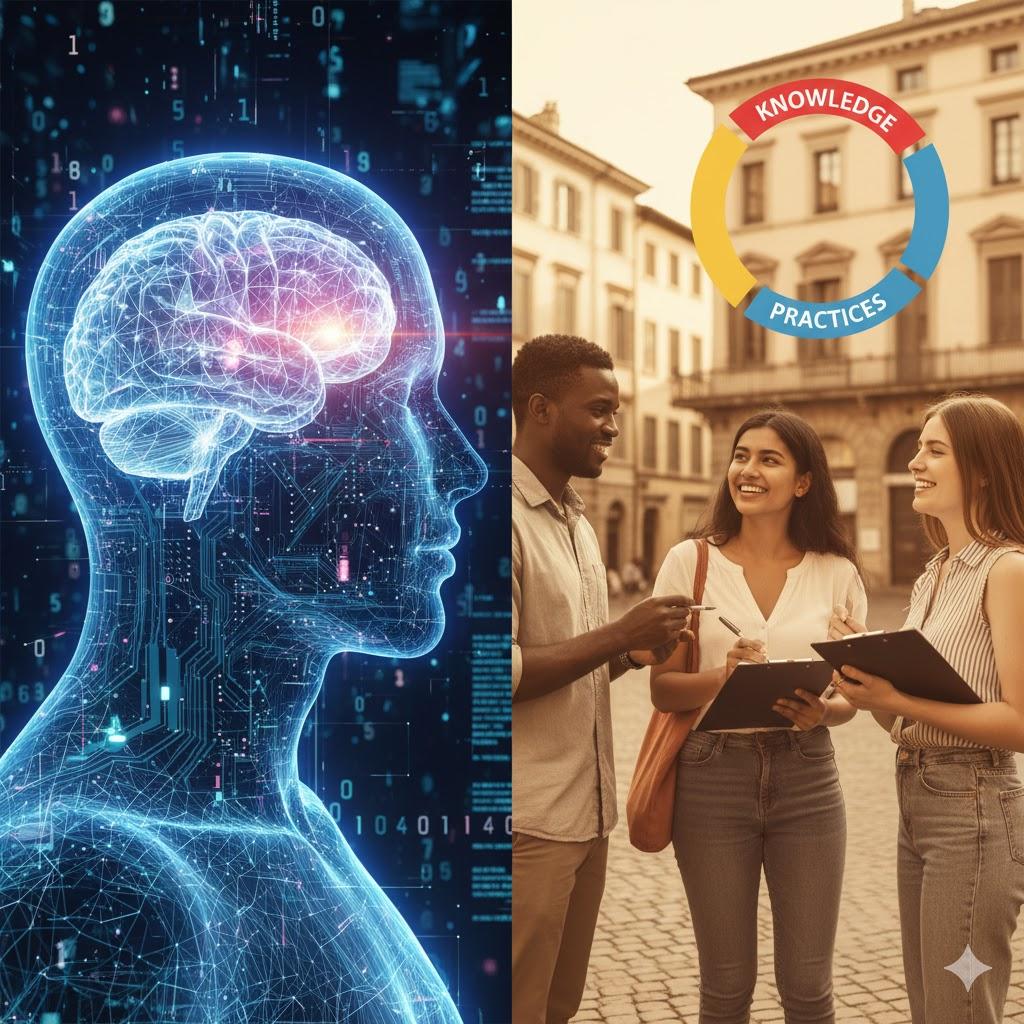
In the insightful article, "Is big data blinding us to the human story?", Rennie Naidoo argues that our modern obsession with "quantification bias" is causing a critical blind spot. We are excellent at gathering Big Data; the massive, numerical "what" of human behavior, but we are increasingly losing our grip on the "thick data"-the "why" that explains it.
Naidoo’s critique is that Big Data shows us patterns but not motivations. It excels at tracking the Practice but remains almost entirely blind to the Knowledge and Attitudes that drive that practice. This is precisely where the KAP (Knowledge, Attitudes, and Practices) survey provides its value, acting as the "corrective lens" Naidoo calls for to bring the human story back into focus.
The Blind Spot of Big Data
Big Data alone is a flawed storyteller. As Naidoo points out, it can tell us what is happening but not why.
A corporation might see high click-through rates (a Practice) and assume its flashy ad campaign is a success. But as Naidoo warns, this data doesn't capture the audience's underlying Attitude-they might find the brand "annoying" even as they engage with the content.
Similarly, Naidoo uses the example of AI-driven recruitment. The data might filter candidates based on keywords (a quantifiable Practice), but it’s blind to the human qualities of "personal integrity, drive, or leadership potential" (the Attitudes and internal character) that truly define a good employee.
In these examples, the human story is erased, replaced by a number that has been mistaken for the truth.
How KAP Surveys Help Us Interpret the Story
The "human story" is not just a record of what we do (Practices). It’s a complex narrative of what we know, what we fear, what we believe, and what we value.
A KAP survey is a tool designed specifically to interpret this narrative. It forces us to see behavior not as an isolated data point, but as the final outcome of two invisible drivers:
- Knowledge (K): What does the person know or believe to be true?
- Attitudes (A): How does the person feel about the topic? (e.g., trust, fear, cultural norms, perceived value).
The interpretation of the human story lies in the gaps and connections between these three elements.
- Interpreting Contradiction: The richest human stories are often about contradiction. A KAP survey can find that people have perfect Knowledge that smoking is deadly, but their Practice continues. That gap is the story. The interpretation is not "people are irrational"; it's a story of addiction, social norms, or fatalism (the Attitude) that is more powerful than the fact.
- Interpreting "Why Not": Let's apply this to Naidoo's example of crime maps. Big Data shows where crime is reported (the Practice). A KAP survey in the "cold" areas would interpret why there are no reports. It would likely find that the Practice (not reporting) is driven by a powerful Attitude of deep-rooted distrust of the police. The story isn't "no crime"; the story is "no trust."
Big Data may give us the what, but KAP surveys provide the "why." They are the "thick data" Naidoo argues for, quantifying the very human, non-numerical elements of trust, motivation, and belief. They allow us to stop being "blinded" by the numbers and, instead, start "listening closely to the stories behind the numbers," as Naidoo’s article so aptly concludes.





