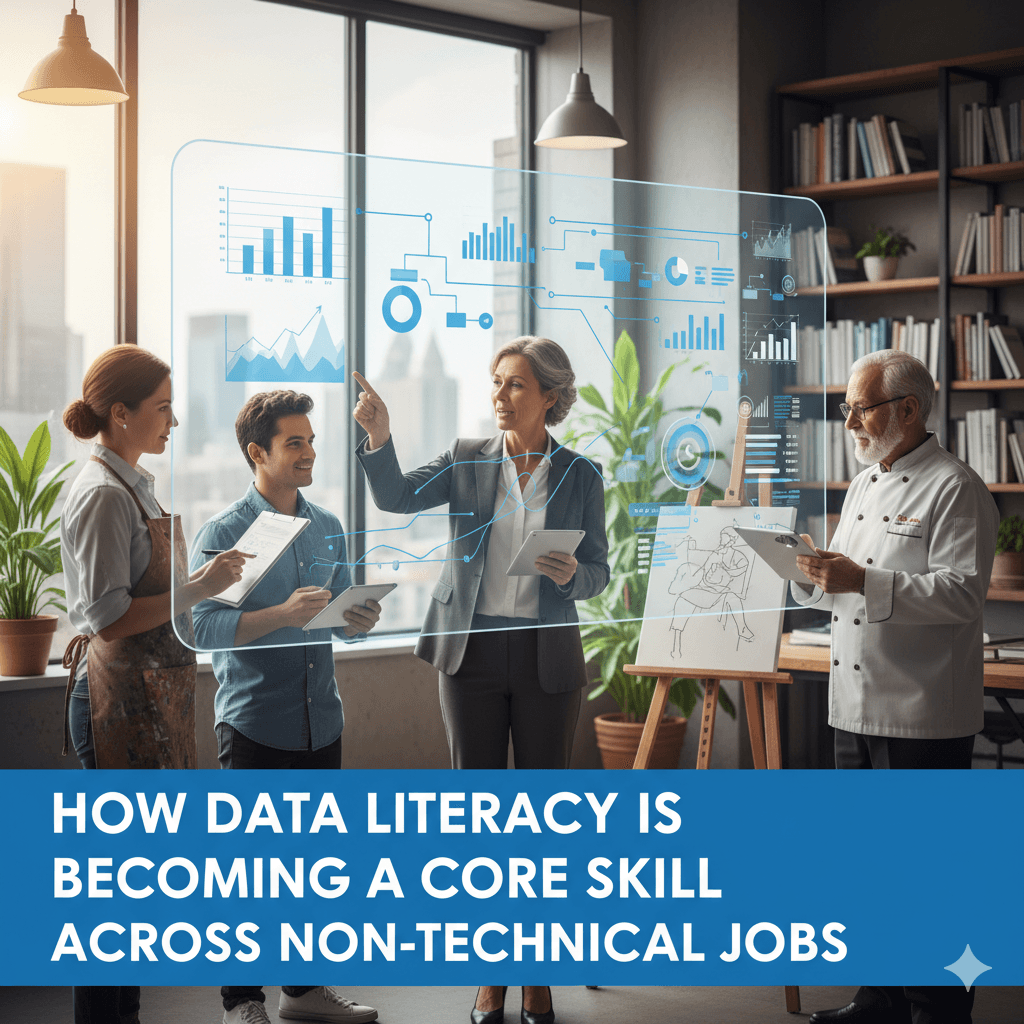
In the modern workplace, data is no longer confined to the back offices of data scientists and engineers. As companies increasingly rely on data-driven decision-making, data literacy — the ability to read, work with, analyze, and communicate data — is rapidly becoming a core competency for non-technical roles too. Managers, marketers, HR professionals, operations staff, and even frontline workers are now expected to understand and use data in their daily work.
This shift has profound implications: it changes training needs, fosters a data-driven culture, and can significantly boost organizational performance. In this article, we explore why data literacy matters for non-technical employees, how it's spreading across job roles, and what organizations can do to build a strong data-literate workforce.
What Is Data Literacy?
Data literacy is not just about knowing how to use tools like Excel or Power BI. IBM defines data literacy as a four-part skillset: reading data, working with data, analyzing data, and “arguing with data” (i.e., communicating insights and building narratives).
Put simply, data-literate employees can:
- Interpret charts, dashboards, and reports
- Ask meaningful questions about data origin and quality
- Leverage data to make informed decisions
- Tell compelling, accurate data-driven stories to influence others
Why Data Literacy Is Becoming Critical for Non-Technical Roles
- Growing Demand Across the Organization
- Research shows that data literacy is no longer a “nice to have” — it’s becoming a must-have for nearly everyone. According to a report by Qlik and The Future Labs, data literacy is projected to be the most in-demand skill by 2030.
Even in non-technical departments, the expectation for data skills is rising:
- Marketing teams need to analyze campaign data.
- Human Resources uses people analytics to improve retention.
- Operations professionals monitor KPIs to streamline supply chains.
- Better Decision-Making
- Non-technical employees who understand data can make more informed, evidence-based decisions. As noted by GWU’s business school, a data-literate manager doesn’t have to rely solely on data analysts; they can proactively interpret data themselves and act quickly.
This contributes to reduced risk, fewer gut-feel decisions, and stronger business outcomes.
- Empowerment and Engagement
- According to Atlan, employees who are confident in their data skills feel more empowered, contribute more meaningfully, and collaborate better across functions.
When non-technical staff are equipped to understand data, they can challenge assumptions, propose innovations, and contribute to a more democratic knowledge-sharing culture.
- Bridging Silos and Democratizing Data
- Historically, data insight was confined to data teams, creating silos within organizations. But now, many organizations are democratizing access to data, giving non-technical teams self-service analytics tools and governance frameworks so they can use data independently.
This democratization fosters cross-functional collaboration and drives a culture where data is a shared language.
- Future-Proofing the Workforce
- As AI and advanced analytics proliferate, more employees will need to understand not just how to use data, but how data is generated, transformed, and interpreted. Data literacy programs help prepare non-technical staff for these changes.
According to the Data & AI Literacy report, more organizations are extending training to non-technical roles: in recent years, a growing percentage of non-technical employees have received upskilling in data and AI.
Key Data Literacy Skills for Non-Technical Professionals
What exactly should non-technical employees know? Based on industry frameworks and expert commentary, these are some critical components of data literacy:
- Understanding Data Sources & Quality: Knowing where data comes from, how it's collected, and what its limitations are.
- Interpreting Visualizations: Reading graphs, dashboards, and tables; spotting trends, outliers, and anomalies.
- Basic Data Manipulation: Working with datasets in tools like Excel or simple BI platforms—filtering, sorting, aggregating.
- Data-Driven Storytelling: Communicating insights clearly using data, building narratives that influence business decisions.
- Critical Thinking & Questioning: Evaluating data assumptions, challenging biases, and asking the right business questions.
- Ethical Use of Data: Being aware of privacy, security, and regulatory considerations.
Challenges to Building Data Literacy in Non-Technical Teams
While the benefits are clear, many organizations face obstacles when upskilling non-technical staff:
- Confidence Gap: Many non-technical employees feel intimidated by data, unsure where to start, or lack confidence in their ability to use it.
- Siloed Data Culture: Even with available tools, data remains siloed in many companies; cross-functional sharing and data governance can lag.
- Training & Resource Constraints: Rolling out data literacy programs across all job functions is resource-intensive.
- Sustainability: Data literacy isn’t a one-time training — it requires continuous learning, mentorship, and reinforcement.
Strategies for Building a Data-Literate Workforce
To make data literacy a core skill across non-technical roles, companies can adopt several practical strategies:
- Embed Data Literacy in Everyday Workflows
- Encourage cross-functional projects where non-technical teams collaborate with data analysts. For example, customer service teams might review chatbot data, or marketing teams could test campaign messaging against performance metrics.
- Develop a Role-Based Data Curriculum
- Not everyone needs to be a data scientist, but each role should have tailored data literacy competencies. Create learning paths based on job function, from foundational skills (reading data) to intermediate (reporting, storytelling).
- Use Self-Service Analytics Tools
- Invest in user-friendly BI platforms and dashboards that empower non-technical users to explore data independently. Democratized tools reduce dependence on data teams.
- Governance and Data Cataloguing
- Build a data catalog where definitions, metrics, hierarchies, and metadata are documented in business-language. This helps non-technical users understand data context.
- Mentorship & Community Support
- Establish mentorship programs (data champions, centers of excellence) where data-literate employees support others.
- Measure & Incentivize
- Track data literacy progress (through assessments, dashboards) and link it to performance reviews or recognition. This reinforces its importance.
Real-World Impact: Why It Matters
- Improved Decision Quality: Teams make more evidence-based, objective decisions when they understand the data behind them.
- Faster Innovation: When non-technical staff spot insights, they can propose new ideas, products, or process improvements.
- Greater Operational Efficiency: Data-literate operations or HR teams can spot inefficiencies, forecast trends, and optimize workflows.
- Stronger Organizational Culture: A culture of data literacy breaks down silos, encourages collaboration, and fosters ownership of data-driven strategies.
- Resilience & Adaptability: As AI and advanced analytics tools become more pervasive, a data-literate workforce is better equipped to adapt, learn, and thrive.
Conclusion
Data literacy is no longer optional — it’s evolving into a core skill for non-technical roles across all industries. As companies continue democratizing data and empowering every employee to engage with insights, the ability to read, interpret, analyze, and communicate data becomes as fundamental as traditional literacy.
Organizations that invest in data literacy programs not only enable better decision-making but also build more agile, innovative, and inclusive cultures. By equipping non-technical staff with the right skills and mindset, businesses can unlock the full potential of their data and prepare for the future of work.
References
- IBM, What Is Data Literacy? (IBM)
- Qlik / The Future Labs, Data Literacy: The Upskilling Evolution (as reported by TDWI) (TDWI)
- GWU Online Business, Why Data Literacy Is the Must-Have Skill for Managers (The George Washington University)
- Atlan, What Is Data Literacy and Why Is It Important (Atlan)
- Digital Journal, Q&A: Data literacy for non-technical employees (Digital Journal)
- Dataversity, The Future of Data Literacy (Dataversity)
- The Data Literacy Project, The Seven Principles of Data Literacy (The Data Literacy Project)
- Skillnet Ireland, Study of Data and Digital Skills for All Non-IT Roles (Skillnet Ireland)
- TechResearchInfo / Forrester survey (via whitepaper), Building Data Literacy (Tech Research Info)
- MPEs Learning, What Is Data Literacy and Why Is It Important in 2025 (MPES Learning)





