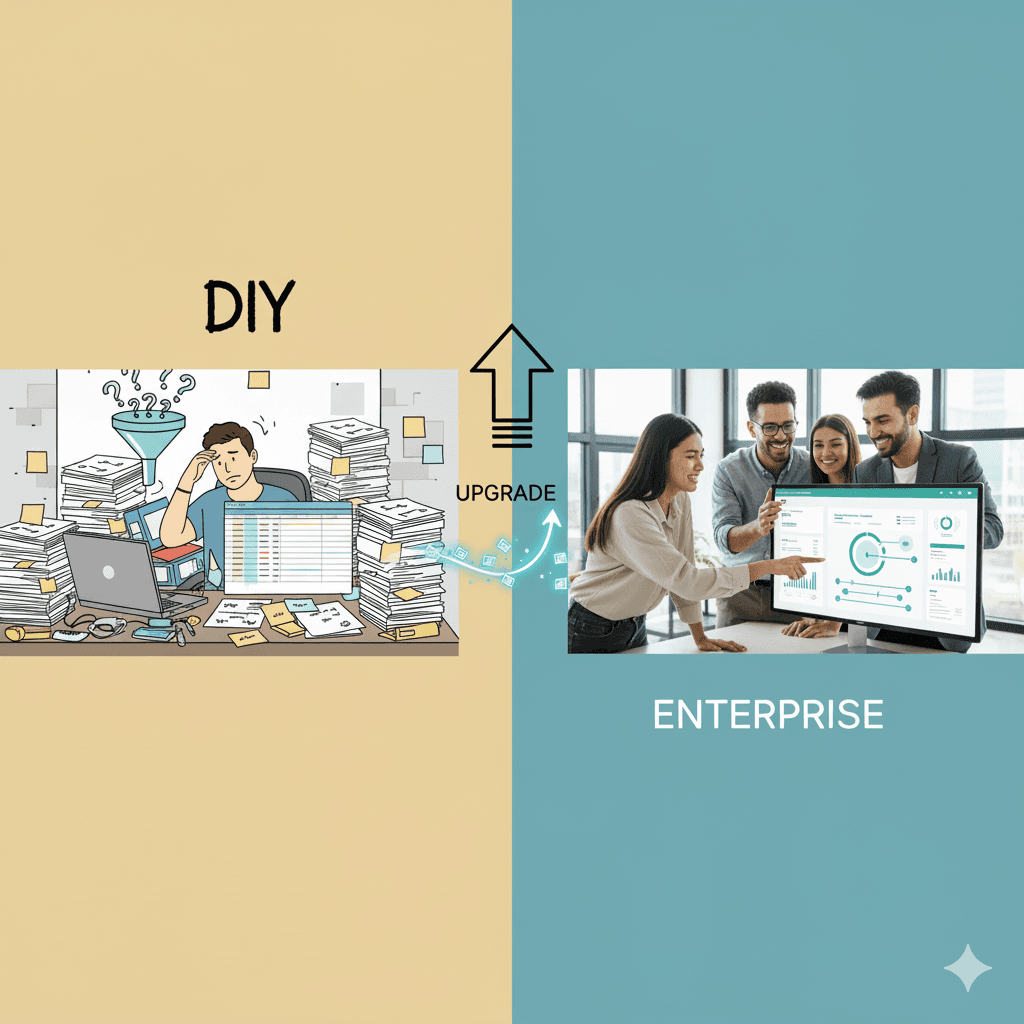
In the age of data-driven decisions, every organization—big or small—needs reliable tools to collect, analyze, and act on survey data. Whether you are running customer satisfaction surveys, employee feedback programs, or market research, your data collection platform plays a central role in shaping outcomes.
But at some point, a question inevitably arises: Is our DIY survey setup still enough—or is it time to move to an enterprise-grade platform?
Let’s break down the key differences and decision points to help you find the right fit for your organization.
1. The DIY Approach: Affordable, Flexible, but Limited
DIY survey tools (like Google Forms, Typeform, or SurveyMonkey’s basic tiers) are ideal for small teams and early-stage projects. They’re easy to set up, budget-friendly, and allow you to start collecting data in minutes—no IT support required.
Best for:
- Startups or small businesses testing new ideas
- Quick customer feedback or event surveys
- Short-term academic or nonprofit projects
Advantages:
- Low cost or free
- Simple user interface
- Minimal setup time
Limitations:
- Limited customization and branding
- Basic analytics and reporting
- Restricted user management
- Weak integrations with other data systems
If your data needs are light and your sample sizes small, DIY tools get the job done. But as your organization grows, so does the complexity of your research—and that’s where cracks begin to show.
2. The Enterprise Upgrade: Scalable, Secure, and Integrated
Enterprise survey platforms (like KAPsurvey, Qualtrics, Medallia, or SurveySparrow Enterprise) go beyond form creation. They offer end-to-end solutions designed for organizations managing large-scale feedback systems, complex logic, and diverse audiences.
Best for:
- Large organizations conducting ongoing research
- Companies integrating survey data with CRM or analytics tools
- Regulated industries with strict data compliance requirements
Advantages:
- Advanced analytics and dashboards
- Strong data security and compliance (GDPR, HIPAA, etc.)
- Multi-language and multi-channel capabilities
- Workflow automation and API integrations
- Professional support and training
These features make enterprise platforms more than just tools—they become strategic assets for managing customer experience, employee engagement, and brand insights.
3. Signs You’re Ready to Upgrade
Here are some telltale signs that your DIY platform has reached its limits:
- Data Silos: You’re manually exporting survey results into Excel or your CRM.
- Inconsistent Data: You struggle to maintain version control or standardized questions.
- Limited Insights: You spend more time cleaning data than analyzing it.
- Security Concerns: Sensitive data isn’t adequately protected.
- Scalability Issues: Your team or respondent base is growing, but your tool isn’t keeping up.
If more than two of these sound familiar, it’s time to evaluate enterprise solutions.
4. The Middle Ground: Hybrid Approaches
Not every organization needs to jump straight to a high-cost enterprise platform. Some mid-tier tools (like Alchemer or QuestionPro) offer scalable plans that balance affordability with power. These hybrid solutions can support growing teams without the steep learning curve or cost of full enterprise software.
5. Making the Switch Smoothly
Transitioning from a DIY setup to an enterprise platform doesn’t have to be disruptive. Here’s how to manage it effectively:
- Audit your current workflows: Identify what works well and what needs improvement.
- Set clear data goals: Define success metrics before migration.
- Plan training: Ensure your team understands new features and analytics tools.
- Integrate gradually: Start with one department or use case before full rollout.
With a phased approach, you’ll minimize friction and maximize the return on your new investment.
Conclusion
The choice between DIY and enterprise survey tools isn’t about one being “better” than the other—it’s about fit. For small teams, DIY solutions offer agility and simplicity. But as your data demands grow, enterprise platforms provide the depth, security, and scalability necessary to keep insights flowing efficiently.
Ultimately, the best time to upgrade is when your data collection bottlenecks are slowing decision-making. When that happens, your survey platform should evolve—just like your organization.
References
- Qualtrics XM Institute. (2024). The State of Experience Management: Technology Trends and Benchmarks.
- Gartner. (2023). Market Guide for Voice of the Customer Applications.
- SurveyMonkey. (2024). Enterprise Survey Solutions Overview.
- Alchemer. (2024). How to Scale Feedback Collection in Growing Organizations.
- Medallia. (2023). The ROI of Experience Management Platforms.





