Overview
In fields ranging from public health, economics to local governance, understanding a community is the first step toward fostering meaningful change.
The Knowledge, Attitudes, and Practices (KAP) survey is a powerful tool designed to do just that. It provides a structured method for gathering critical data, not just on what people know, but on what they believe and how they act.
This guide explores the KAP methodology, from initial design to final analysis, offering a robust framework for organizations aiming to plan, monitor, and evaluate their interventions effectively.
What is the KAP Framework?
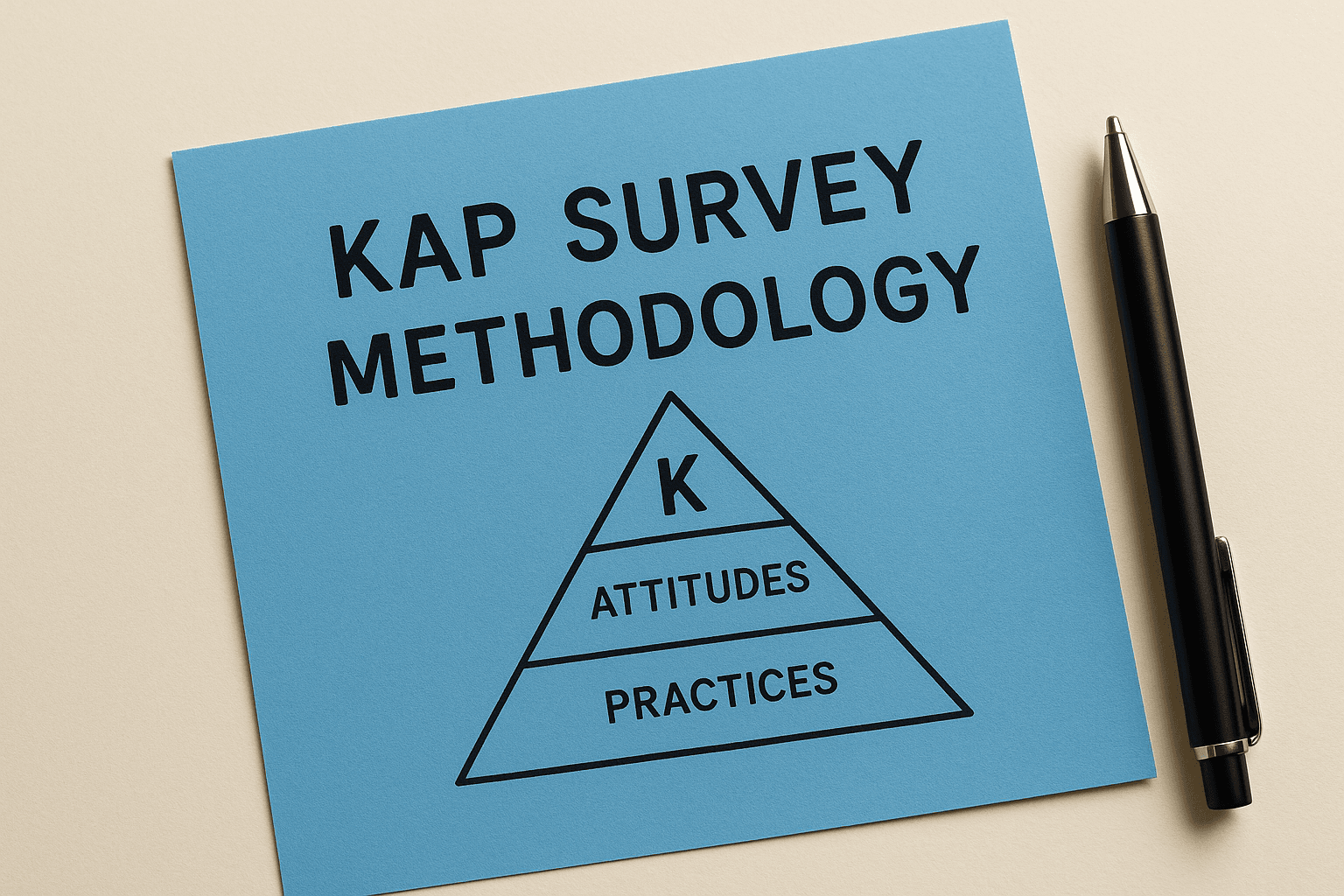
At its core, the KAP framework is built on three pillars that provide a holistic view of a community:
- Knowledge (K): This assesses the level of understanding and information a population has about a specific topic. This could range from knowledge of democratic rights, as highlighted by the International Centre for Local Democracy (ICLD), to awareness of health practices or agricultural techniques.
- Attitudes (A): This delves into the beliefs, feelings, and preconceived notions a community holds. Attitudes often shape behavior and can reveal underlying cultural norms or levels of trust in institutions.
- Practices (P): This measures the real-world actions and behaviors of the population. This is a critical component, as there can often be a significant gap between what people know and what they actually do.
The Core of the Methodology
KAP Design and Implementation
A successful survey depends on a rigorous and well-thought-out process. The KAP design phase is arguably the most critical stage.
First, a clear objective must be established. Are you aiming to establish a KAP baseline before a project begins, or are you conducting a KAP endline survey to measure impact? The objective will shape every subsequent step, including the KAP sampling strategy.
Proper sampling ensures the selected group is representative of the entire target population, making the results credible.
The next step is developing the KAP questionnaire. This is more than just a list of questions; it's a precision instrument. Each of the KAP questions must be carefully crafted to be clear, unbiased, and culturally sensitive to avoid influencing responses.
Once the questionnaire is finalized, the KAP implementation can begin, which involves training data collectors and managing the fieldwork to ensure consistency and quality. Throughout this process, strong KAP ethics must be maintained, guaranteeing participant confidentiality and informed consent.
From Field to Findings
KAP Data Analysis and Reporting
Once the fieldwork is complete, the focus shifts to making sense of the information gathered. The raw KAP data holds the insights, but it requires careful handling.
The KAP analysis phase transforms this raw data into meaningful findings. A key technique often used is KAP scoring, where knowledge-based questions are assigned points to quantify understanding across the population.
This allows for clear, measurable comparisons. For example, by comparing scores from a KAP baseline to a KAP endline, an organization can concretely measure the change in knowledge over the course of a project.
The final KAP results must then be compiled into a clear and accessible format. Effective KAP reporting doesn't just present numbers; it tells a story. It highlights key insights, visualizes trends, and provides actionable recommendations.
This report becomes the foundational document for strategic planning and stakeholder communication.
The Strategic Importance of KAP Evaluation
Ultimately, the entire methodology serves a larger purpose: KAP evaluation and KAP monitoring.
As demonstrated by the ICLD's work in local democracy, KAP surveys are essential for identifying knowledge gaps, understanding public attitudes toward governance, and assessing citizen participation.
By integrating this methodology, organizations can:
- Identify Needs: Pinpoint specific areas where interventions are most needed.
- Measure Impact: Move beyond anecdotal evidence to quantitatively demonstrate the effectiveness of their programs.
- Drive Strategy: Use evidence to refine their approach and make informed decisions that lead to lasting behavior change.
In conclusion, the KAP methodology provides a comprehensive and adaptable framework for any organization committed to evidence-based practice.
From KAP design to KAP reporting, it offers a structured path to deeply understand a community and, in doing so, to better serve it.
FAQs
- What exactly does a KAP survey measure?
A KAP survey measures three things: what a population knows (Knowledge), what they believe or feel (Attitudes), and how they actually behave (Practices) regarding a specific topic.
2. How do organizations use the results from a KAP survey?
Organizations use KAP survey results to identify community needs, quantitatively measure the impact of their programs, and use the evidence to make informed strategic decisions.
References
This article is informed and inspired by the principles and public resources of the International Centre for Local Democracy (ICLD), which effectively utilizes KAP surveys to support and evaluate its work in local democracy worldwide. You can learn more at https://icld.se/en/knowledge-attitudes-and-practices-kap-survey/.