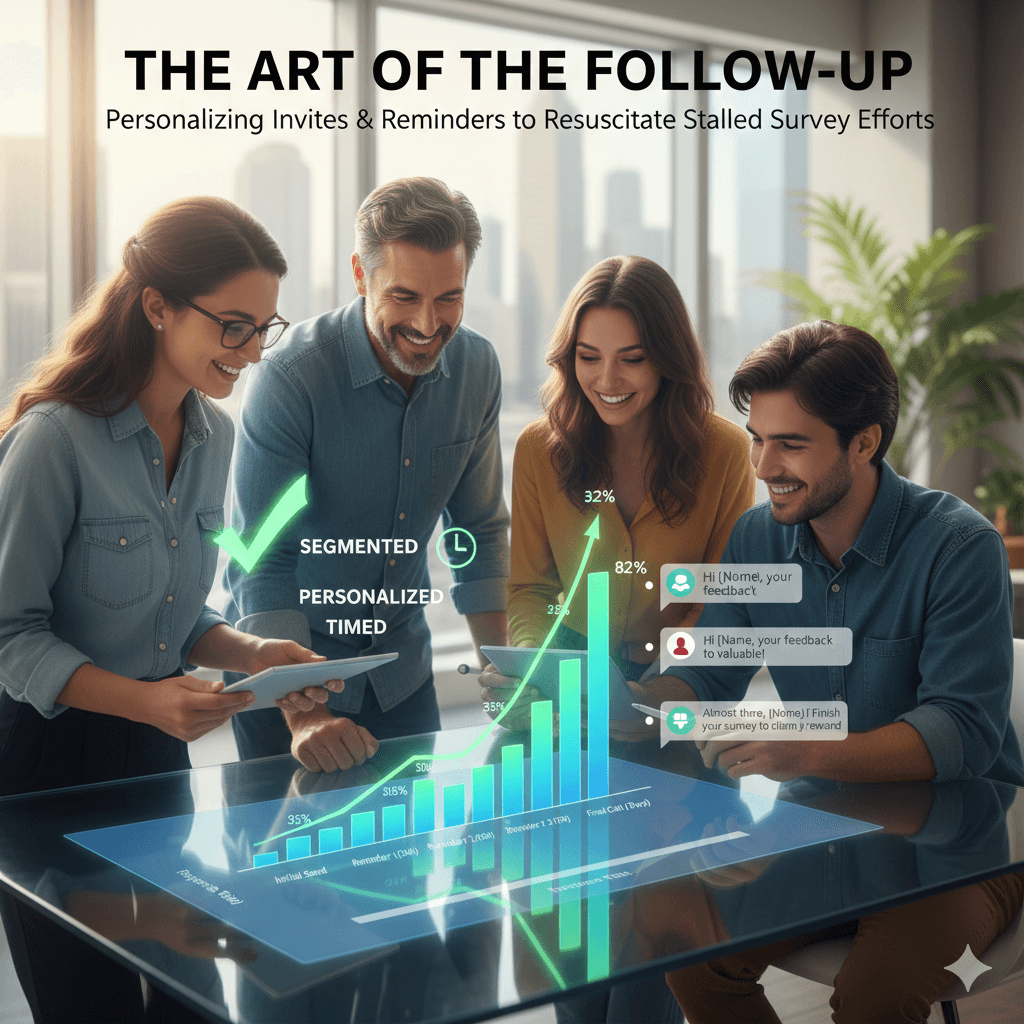
Personalizing Invites and Reminders to Resuscitate Stalled Survey Efforts
In the world of surveys, getting that initial response can feel like hitting a grand slam. But what happens when your carefully crafted survey launch is met with radio silence, or a respectable but ultimately insufficient response rate? This is where the true "art" comes into play – the art of the follow-up. It's not about nagging; it's about strategically and thoughtfully re-engaging your audience with personalized invites and reminders. By focusing on timing, tone, and segmentation, you can breathe new life into stalled survey efforts and gather the valuable insights you need.
The Power of Timing: When to Nudge, Not Nag
Timing is perhaps the most critical element in effective follow-up. Send a reminder too soon, and you risk annoying your audience. Wait too long, and your survey might fall into oblivion.
- Initial Reminder (24-48 hours after invite): This first reminder should be a gentle nudge, primarily aimed at those who may have missed the initial email or simply forgotten. Keep it brief, polite, and reiterate the value of their feedback.
- Second Reminder (3-5 days after initial invite): For those who still haven't responded, this reminder can be a bit more direct but still respectful. Consider highlighting a specific benefit of completing the survey or addressing common reasons for non-response (e.g., "It only takes 5 minutes!").
- Final Reminder/Last Chance (7-10 days after initial invite): This is often your last opportunity. Create a sense of urgency without being pushy. Clearly state that the survey will be closing soon. This is also an excellent opportunity to offer an incentive if you haven't already, or remind them of one if it was previously mentioned.
- Consideration for Survey Length: Longer, more complex surveys might warrant slightly longer intervals between reminders, giving respondents more time to dedicate to their participation. Conversely, very short surveys might benefit from slightly tighter timing.
The Nuance of Tone: Striking the Right Chord
Your tone can make or break your follow-up efforts. It needs to be professional, appreciative, and persuasive without being demanding.
- Appreciation is Key: Always start with gratitude for their time and consideration. Even if they haven't responded yet, acknowledging their potential future participation sets a positive tone.
- Be Concise and Clear: People are busy. Get straight to the point, reminding them about the survey, its purpose, and the estimated time commitment.
- Emphasize Value: Clearly articulate why their feedback matters. How will their input be used? What impact will it have? Connect their participation to a tangible outcome, whether it's improving a product, service, or community.
- Maintain a Helpful Stance: Offer assistance if they've encountered any issues. Provide a direct link to the survey and contact information for support.
- Avoid Guilt Trips or Aggression: Phrases like "You still haven't responded" or "Don't you care about..." are counterproductive and can alienate your audience. Focus on encouragement and benefit, not blame.
- Experiment with Subject Lines: Your subject line is your first impression. Test different approaches – short and punchy, benefit-driven, or curiosity-inducing. Examples: "A Gentle Reminder: Your Feedback Matters," "Last Chance: Share Your Thoughts on [Topic]," "We Still Need Your Insight for [Project Name]."
The Strategy of Segmentation: Tailoring Your Message
Not all non-responders are created equal. Segmenting your audience allows you to tailor your follow-up messages for maximum impact.
- Non-Responders vs. Partial Completers:
- Non-Responders: These individuals haven't started the survey at all. Your reminders should focus on the initial invitation, the purpose of the survey, and the ease of participation.
- Partial Completers: These respondents started but didn't finish. Your message to them can be more specific, acknowledging their effort so far and encouraging them to complete the remaining sections. You might even be able to link them directly back to where they left off. "We noticed you started our survey on [Topic] – your insights are valuable! Click here to pick up where you left off."
- Demographic or Behavioral Segments: If you have prior data on your audience, consider segmenting based on demographics (e.g., age group, location, customer type) or past behavior (e.g., frequent users, new customers). This allows for even deeper personalization.
- Example: A reminder to a segment of long-term customers might emphasize how their historical feedback has shaped previous improvements, reinforcing their importance.
- Incentive Recipients: If you offered an incentive, segment those who haven't responded and gently remind them about the reward for completion.
- Different Communication Channels: While email is primary, consider segmenting based on preferred communication channels if you have that data (e.g., in-app notifications, SMS for highly engaged users).
Practical Tips for Success
- Automate, but Personalize: Use survey platforms or marketing automation tools to schedule reminders, but always ensure the content feels personal and not robotic. Dynamic fields (like first name) are essential.
- Test and Learn: A/B test different subject lines, body copy, and timing intervals to see what resonates best with your specific audience.
- Provide an Opt-Out: Always include an easy way for people to opt out of further survey communications. This respects their preferences and maintains a positive relationship.
- Monitor Response Rates: Keep a close eye on your response rate after each follow-up. This data will inform your future strategies.
Conclusion
The art of the follow-up isn't about sending generic blasts; it's about thoughtful, strategic communication designed to re-engage and motivate. By mastering the timing, refining your tone, and segmenting your audience, you can transform stalled survey efforts into successful data collection initiatives, ultimately yielding the rich insights that drive informed decisions. It's a blend of science and empathy, turning a simple nudge into a powerful catalyst for participation.





