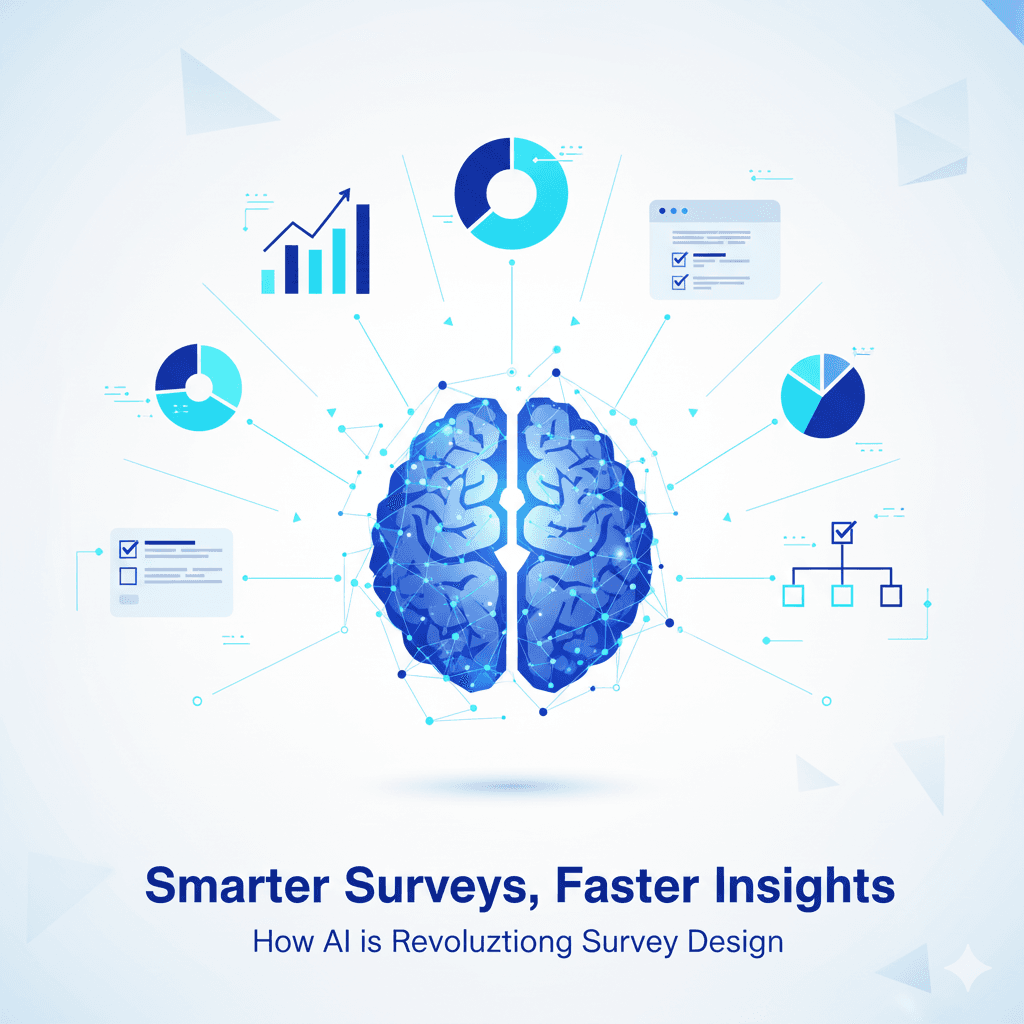
How AI is Revolutionizing Survey Design
In the realm of research and data collection, surveys have long been a cornerstone for gathering valuable insights. However, the traditional process of designing and implementing surveys can be a time-consuming and labor-intensive endeavor.
From crafting the right questions to ensuring a logical flow, every step demands meticulous attention to detail. But what if we could make this process smarter, faster, and more effective? Enter Artificial Intelligence (AI), a transformative force that is reshaping the landscape of survey design and data collection as we know it.
The AI-Powered Survey Builder
Gone are the days of staring at a blank page, struggling to formulate the right questions. Modern AI-powered survey builder tools are designed to be your intelligent partners in the survey creation process. These tools can suggest various question formats, refine awkward phrasing, and even tailor the tone of the survey to resonate with your target audience.
This not only accelerates the brainstorming and drafting phases but also significantly enhances the quality of your questions. By ensuring that questions are clear, concise, and free from jargon, AI helps to minimize ambiguity and the potential for bias, leading to more accurate and reliable data. This evolution of the survey methodology allows researchers to focus more on the strategic aspects of their research protocol and less on the manual mechanics of question writing.
Optimizing the Respondent Experience with Intelligent Survey Flow
A common challenge in survey research is respondent fatigue and drop-off. A poorly structured survey with an illogical flow can quickly disengage participants, leading to incomplete responses and skewed data.
AI is tackling this challenge head-on by optimizing the survey flow with intelligent logic and sequencing. AI algorithms can analyze the structure of your survey and recommend the most effective order for your questions, thereby minimizing the cognitive load on respondents. Furthermore, AI can predict potential points of disengagement and suggest improvements to keep participants interested and motivated.
The automation of complex skip logic and branching based on response patterns creates a more personalized and intuitive experience for each respondent, making the survey feel more like a conversation and less like an interrogation. This is a crucial step forward for any online survey tool or mobile survey platform.
From Static to Dynamic: The Dawn of Interactive Data Collection
The integration of AI, particularly Large Language Models (LLMs), is pushing the boundaries of what a survey can be. We are moving away from static, one-size-fits-all questionnaires towards dynamic, interactive experiences.
Imagine a survey where a chatbot interviewer can probe for more in-depth responses, ask clarifying questions, and adapt the line of questioning in real-time based on the respondent's answers. This not only provides richer, more nuanced data but also makes the process more engaging for the participant.
This dynamic approach is particularly valuable for KAP (Knowledge, Attitudes, and Practices) research, where understanding the "why" behind the "what" is paramount. A well-designed KAP study design with clear KAP objectives can leverage AI to gain deeper insights into community perceptions.
Revolutionizing Field Data Collection and Analysis
The impact of AI extends beyond online surveys. For researchers conducting field data collection, AI-powered tools are a game-changer. A modern KAP survey app can facilitate offline data collection, allowing researchers to gather data in remote locations without an internet connection. Features like GPS tagging can automatically capture the location of each survey, adding a valuable layer of geographic context to the data.
When it comes to analysis, AI can perform a preliminary KAP analysis and KAP evaluation in a fraction of the time it would take a human researcher. By identifying patterns, trends, and anomalies in the data, AI empowers researchers to focus on the interpretation of the findings and the formulation of actionable recommendations. This is where the true power of a comprehensive survey platform comes to the fore.
The integration of AI into survey design is not about replacing human researchers but about empowering them with more intelligent and efficient tools. As AI technology continues to evolve, we can expect to see even more innovative applications that will further enhance our ability to gather and analyze data, leading to a deeper understanding of the world around us.
Reference
This blog post was written with reference to the article "Smarter Surveys, Faster: How AI Is Transforming Survey Design" from GreenBook.