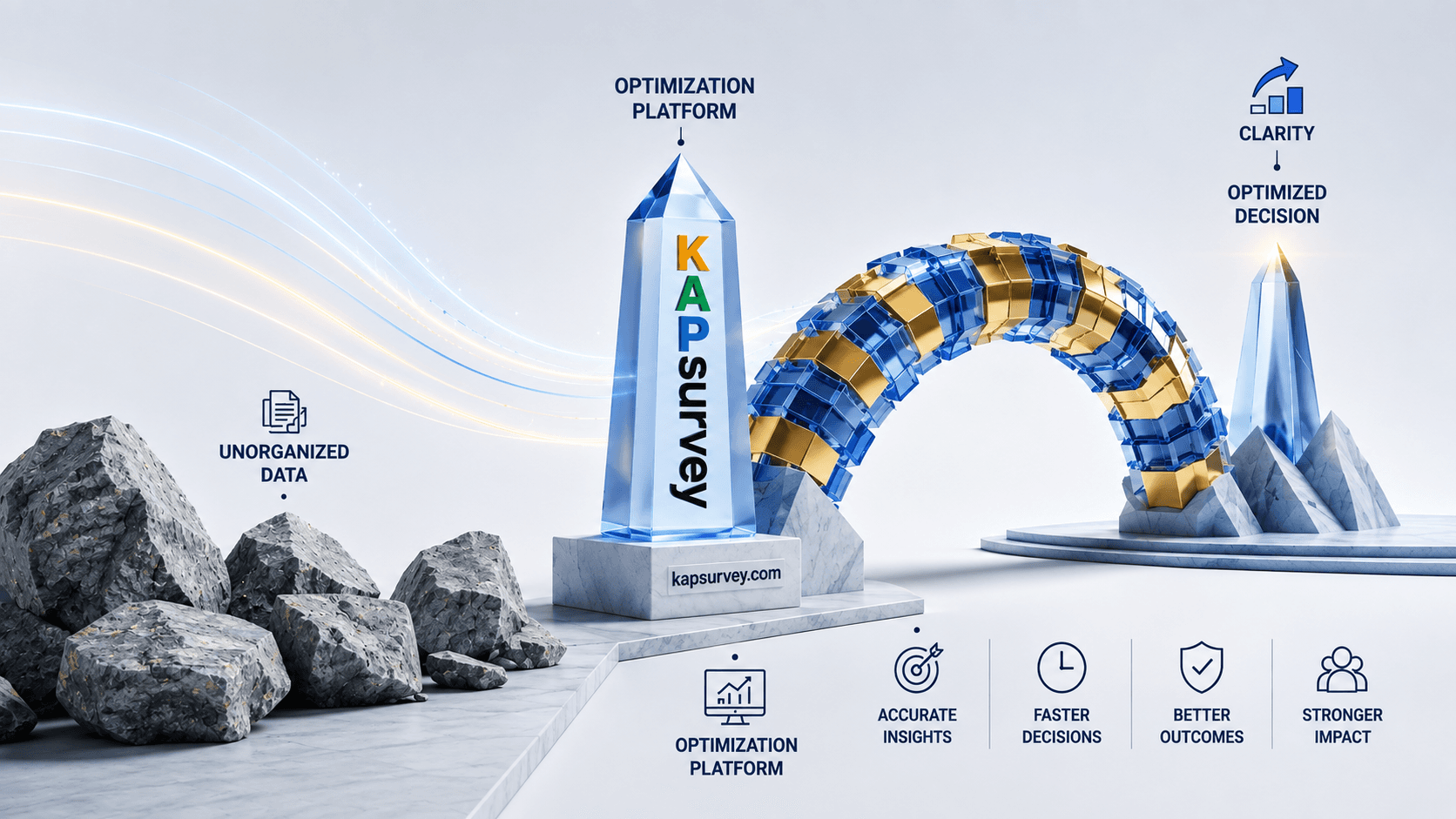
It is a staggering reality in the world of field research: organizations spend immense amounts of time and capital collecting data, yet 70% of survey data goes completely unanalyzed.
If you ask any M&E director or program manager, they will likely tell you that they spend three times as much effort collecting information as they do acting on it. As a result, an estimated 1 in 3 programs are forced to make critical, high-stakes decisions without relying on the very data they paid to collect.
Most organizations are collecting data. Very few are collecting the right data, the right way.
Where is the disconnect? Let's break down the gap between the field and the boardroom, and look at how modern tools like the KAPsurvey Platform are bridging it.
The Gap: Where Traditional Surveys Break Down
The journey from a field interview to a programmatic decision usually breaks down in one of four areas:
- Designed in Silos: Survey teams often build questionnaires without input from the decision-makers who will actually use the data. This leads to questions that are interesting, but ultimately unactionable.
- Asking the Wrong Questions: Teams frequently default to measuring what is easy to measure rather than what matters, relying heavily on vanity metrics instead of deep, behavioral insights.
- Poor Field Quality: Deploying enumerators with paper forms or disconnected, generic apps introduces massive risks. Errors, skipped mandatory questions, and sync delays corrupt the dataset before the analysis phase even begins.
- Analysis Paralysis: Once the data finally arrives, analysts are overwhelmed by raw, unstructured spreadsheets. Reports pile up in a backlog, and critical project decisions are stalled while waiting for the data cleaning to finish.
What Decision-Ready Data Actually Looks Like
To move from merely collecting data to actively driving decisions, organizations need to adopt a few core principles of intentional survey design:
- Start With the Decision: Define the exact programmatic question you need answered before you design a single survey item.
- Design for Analysis: Structure your data so it can be aggregated, filtered, and compared effortlessly from day one.
- Minimize Burden, Maximize Signal: Shorter, smarter surveys yield much better quality responses than exhaustive, fatiguing questionnaires.
- Validate in the Field: Build logic checks and constraints directly into the tool to catch human errors at the exact point of collection.
- Close the Loop: Create a definitive workflow that moves from raw data to insight to action, with clear ownership at every step.
Bridging the Gap with KAPsurvey
To execute these principles, you cannot rely on fragmented tools. You need an ecosystem built for the full data journey.
The KAPsurvey Platform was designed specifically to eliminate the friction between field collection and stakeholder reporting. Here is how it transforms the process:
- Smart Form Builder: Stop wrestling with clunky spreadsheets. KAPsurvey's drag-and-drop builder allows you to bake intense logic, skip conditions, and strict validation rules directly into your instrument.
- Offline-First Mobile: Your field teams can collect data confidently—internet or not. The mobile app securely caches records and syncs automatically the moment connectivity is restored.
- Real-Time Analytics: Forget waiting weeks for data cleaning. The platform generates live dashboards the moment data comes in, allowing you to monitor quotas and metrics instantly.
- Precise Role Management: Securely assign precise access controls for enumerators, supervisors, and data analysts to maintain a clean chain of custody.
Whether you are an NGO running a baseline evaluation, a government agency managing a census, or a consultancy deploying a multi-site project, standardizing your methodology on a purpose-built platform ensures your data is actually decision-ready.
Stop treating data collection and data analysis as two different projects.
Ready to dive deeper? Visit kapsurvey.com to start building your next assessment today.





