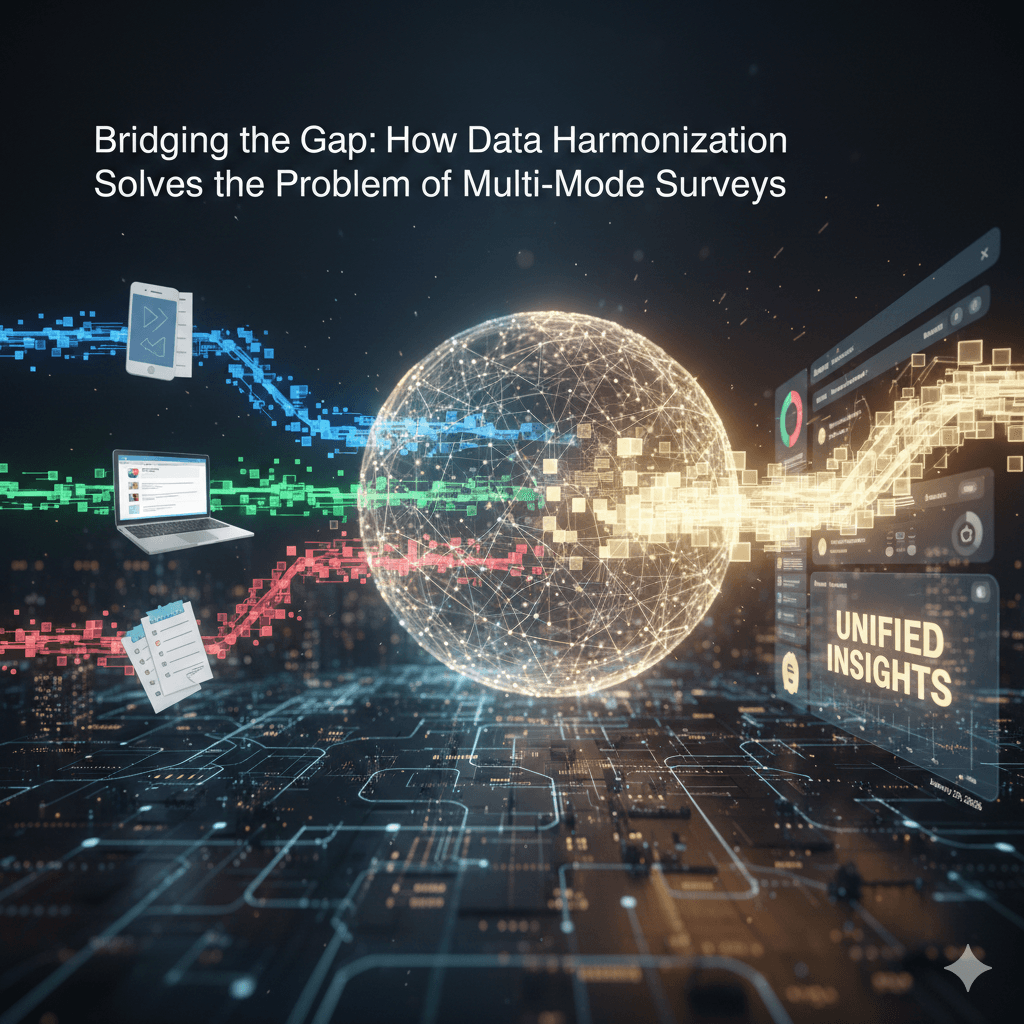
In the digital age, researchers and organizations increasingly rely on multi-mode surveys — combining data from web, phone, and mobile channels — to reach representative samples and maximize response rates. A major challenge that arises with this approach, however, is ensuring that the data from these different collection methods can be combined consistently and meaningfully. This is where data harmonization becomes essential.
What Are Multi-Mode Surveys?
Multi-mode surveys use more than one data collection channel — for example:
- Web surveys completed online
- Phone interviews conducted via human interviewers or automated systems
- Mobile surveys collected through apps or SMS
Each mode has strengths: web and mobile surveys are cost-effective and scalable, while phone surveys can improve response rates among less digitally connected populations. But differences in how questions are asked, how respondents interpret them, and how responses are recorded can create inconsistencies known as mode effects. These differences can bias results if not addressed properly.
Why Data Harmonization Matters
Data harmonization is the systematic process of integrating and standardizing data from diverse sources into a consistent and unified dataset suitable for analysis. ☑️ This includes aligning variable formats, coding structures, metadata definitions, and handling differences in question wording or response options.
Without harmonization, analysts risk comparing “apples and oranges.” For example, response options might differ slightly between a web form and a phone interview, leading to misleading averages or trends if these differences aren’t reconciled.
Techniques for Harmonizing Multi-Mode Survey Data
A robust harmonization strategy typically includes several techniques, both at the design and analysis stages:
1. Consistent Questionnaire Design
To minimize discrepancies across modes, questions should be designed so they can be asked in the same way regardless of channel. When identical wording isn’t possible (e.g., in phone vs. web), design questions so they can be mapped logically during post-collection processing.
2. Metadata and Master Records
Before merging data, create a metadata dictionary that documents variable names, formats, and code frames for each mode. This “master record” serves as the blueprint for how data from different modes align.
3. Variable Mapping and Standardization
When variable names or scales differ, each must be mapped into a common data model. This might mean recoding scales, harmonizing labels, or converting formats so that all datasets align with a consistent structure.
4. Advanced Statistical Adjustments
After initial harmonization, analysts may use weighting, imputation, or statistical models (e.g., multilevel regression and poststratification) to adjust for residual differences and mode effects. These techniques help ensure estimates reflect true patterns rather than artifacts of how the data were collected.
5. Quality Assurance and Consistency Checks
Automated consistency checks (e.g., identifying outliers or missing values) and comprehensive documentation reduce the risk of errors and improve the quality of the harmonized dataset.
Benefits of Effective Harmonization
When done well, harmonization:
- Increases comparability across modes of data collection
- Ensures accuracy, reducing biases introduced by modality differences
- Improves efficiency, enabling combined datasets to be analyzed as though collected under a unified system
- Enables richer insights, since analysts can leverage a larger and more diverse sample
Example: KAPsurvey as a Harmonization-Ready Platform
Platforms like KAPsurvey are designed to support multi-mode data collection and harmonization workflows. By providing flexible survey distribution (web, mobile, and phone data import) and comprehensive data management features, KAPsurvey helps research teams:
- Maintain consistent variable naming and coding standards regardless of collection mode
- Manage metadata centrally, so each mode’s data maps into a unified structure
- Export datasets in formats ready for analysis with harmonization techniques
In this way, KAPsurvey not only facilitates the collection of multi-mode survey data but also supports the harmonization processes that make integrated analysis possible. This capability is essential for projects that need to deliver high-quality, comparable insights across diverse respondent groups.
Conclusion
As survey research continues to evolve in complexity and reach, harmonizing multi-mode data isn’t just a convenience — it’s a necessity. A thoughtful approach to harmonization ensures that data from web, phone, and mobile sources can be combined without sacrificing quality or consistency. Whether through careful questionnaire design, metadata management, or advanced statistical techniques, harmonization bridges the gap between disparate data streams and actionable insights.
Tools like KAPsurvey demonstrate how modern survey platforms can support these practices, empowering analysts to collect, manage, and unify multi-mode data with confidence.
References
(for further reading)
- CCSG — Introduction to data harmonization principles in survey research.
- Survey Practice — Considerations for data processing in multi-mode surveys.
- Retroharmonize — Workflow steps for survey harmonization.
- Oxford Academic — Techniques for mixed-mode survey adjustment.





